Thursday, 16 January 2014

Hasselblad

I began my personal project by shooting rolls of 120 film, I was practicing which lighting techniques I prefer. As well as getting use to the camera itself. 
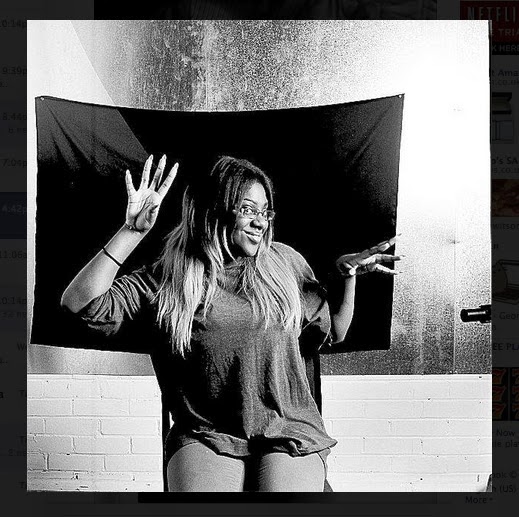
I like the composition of this photograph and the models pose. I also like the use of black and white which makes the photo have lots of contrast.


Again similar to the shot above the subject is close up, showing mainly her face. The expression on the models face creates quite an intense mood with the direct eye contact and the expression.

I moved the tripod further back to see how much more light is allowed into the lens. I prefer the close up shots personally I think they create more of a interesting portrait personally.


Again I was experimenting taking long and short distance shots, I still prefer the close-ups... however, I do like the lighting in the image.

I quite like the composition of the model, however I don't think her facial expression is serious enough.. ha.


Personal Project

For this personal section of my portrait project I have decided to use the theme Family. To me personally family is more important than anything else, the closeness of a family is something that money cannot ever buy. In human context, a family is a group of people that are connected by consanguinity (which refers to the property of being the same kinship as another person), by marriage and shared consumption. I would like to photograph my close family within a series of images because I feel that the photographs of people that you are close to will mean more to me than a fashion shoot, which I hope the viewer can appreciate to.
I would like to document my family members in the locations I normally visit them which will create a documentary style and sense of realism. I have been looking at various portrait photographers such as Edward S.Curtis, Josef Von Sternberg and David Bailey. One of my many inspirations is Don McCullin, particularly one of his photographs of a 'Homeless Irishman' taken in East End, London 1969. When I first seen the photograph I couldn't believe the intensity and rawness which it portrayed.
Some of his photographs show the humans who have been pushed aside and ignored by our society; in my eyes the photograph speaks out, not in a distracting way but subtle. I believe the photograph implies realism in a documentary style.
These are the emotions I want people to feel when looking at my images, I also decided that I am going to use black and white film. I feel that using black and white film will create an atmosphere as the viewer will not be distracted by colour whilst looking at the different portraits of my family. I think the black and white will create a dramatic mood with different contrasting shadows. I have chosen the Hasselblad camera as I want my final photographs to have a square format, I also enjoy using the camera and I feel comfortable using it.
I am hoping that this final section of my portrait project will help me gain confidence and independence as this will be my first time planning a personal project. These skills are vital within the photography profession and this is the perfect opportunity for me to practice them. My aims are to develop an ability to experiment and be competent with new equipment, in terms of using the Hasselblad camera using different lighting techniques.
I also want to apply a creative thought process in my production of images, by using my family members. Although family photographs are quite common I would like to portray the photographs in a different way to mainstream. Family members all share personal information with each other that would not share with anyone else. The closeness between family members is very interesting, this is why I decided to photograph my family as a group separately.
I am determined to demonstrate a range of advanced techniques and processes, For example I will be shooting the photographs, using black and white film, processing it and finally printing them. I find it quite ironic that the camera I have decided to use takes quite a lot of time in comparison to digital, I also find it ironic because all spend a lot of time together and it felt right that I was using this method to complete this series of photographs.

Martin Par

Martin Par is one of my inspirations. The main thing I love about all of his photographs his use of colour, his images have so much contrast I can't help at each one of them.
His use of flash enhances the background as well as the subjects. The photo creates a relaxed mood as the models appear very calm as they are getting a lovely cold shower after laying on a hot beach.  

 I love the composition of this photo, the subjects make the viewer look directly to the centre of the image. I like how the colours of the little boys hair and jumper, it really stands out from the grey dull background.


Fill in Flash

I took the photographs below using fill in flash at Greatham woods. These photographs are unedited however I am going to use one as my final shot as I feel it fulfils the brief and I am satisfied with the lighting, contrast and also the background.
I have loved experiencing how to learn the digital fill-in flash technique and creating photos I am actually pleased with.
The difference of using a fill-in flash to not using no other light source than natural light is that the shadows from the background seem to disappear and make the full photo light up.


Fill in flash


'I'm known for taking pictures very close, and the older I get, the closer I get.'


Bruce Gilden - I like the way he holds his fill flash.

http://www.youtube.com/watch?v=IRBARi09je8 


Watch the Video above shown to me last year by Antony Chambers. Very interesting, very street!
When I first watched the video above I found it fascinating how different people work differently whilst shooting, its interesting also to see how people react to people taking your photograph and also how some people are not bothered and don't react.


Larry Sultan

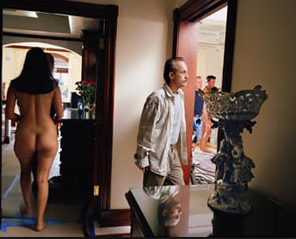
I found some of Larry Sultan's photographs quite interesting whilst looking at photographers who uses fill in flash. Especially his personal project 'The Valley'... which I found some interesting information about below took from http://www.brancolinigrimaldi.com/article/exhibitions-past-larry-sultan-the-valley&slide=on&image=4


Fill in Flash

Within our Portraiture project we also have to shoot a digital fill flash photograph. I was pleased to vary the use of cameras in the project (Having the advantage of using digital and film cameras) and found it quite exciting to use a fill flash for the first time- as I have only used studio lighting and cameras built in flash.
I thought the fill in flash photograph would be quite easy to take, however, it's actually quite hard to brighten deep shadow areas. Its vital to use the appropriate aperture and shutter speed to correctly expose the background, also adjusting the flash to the same exposures. Its easy to overexpose the subject, especially at a close range.
Below is a few of my first attempts at using fill in flash, I think I managed okay actually... these are unedited.

The flash was too bright in this photograph- as you can see the model's face appears far more lit up than anything else in the background. However, I like the background how the model is in focus to the blurry leaves. I would be satisfied with the photograph if her face was only a little less lit. 

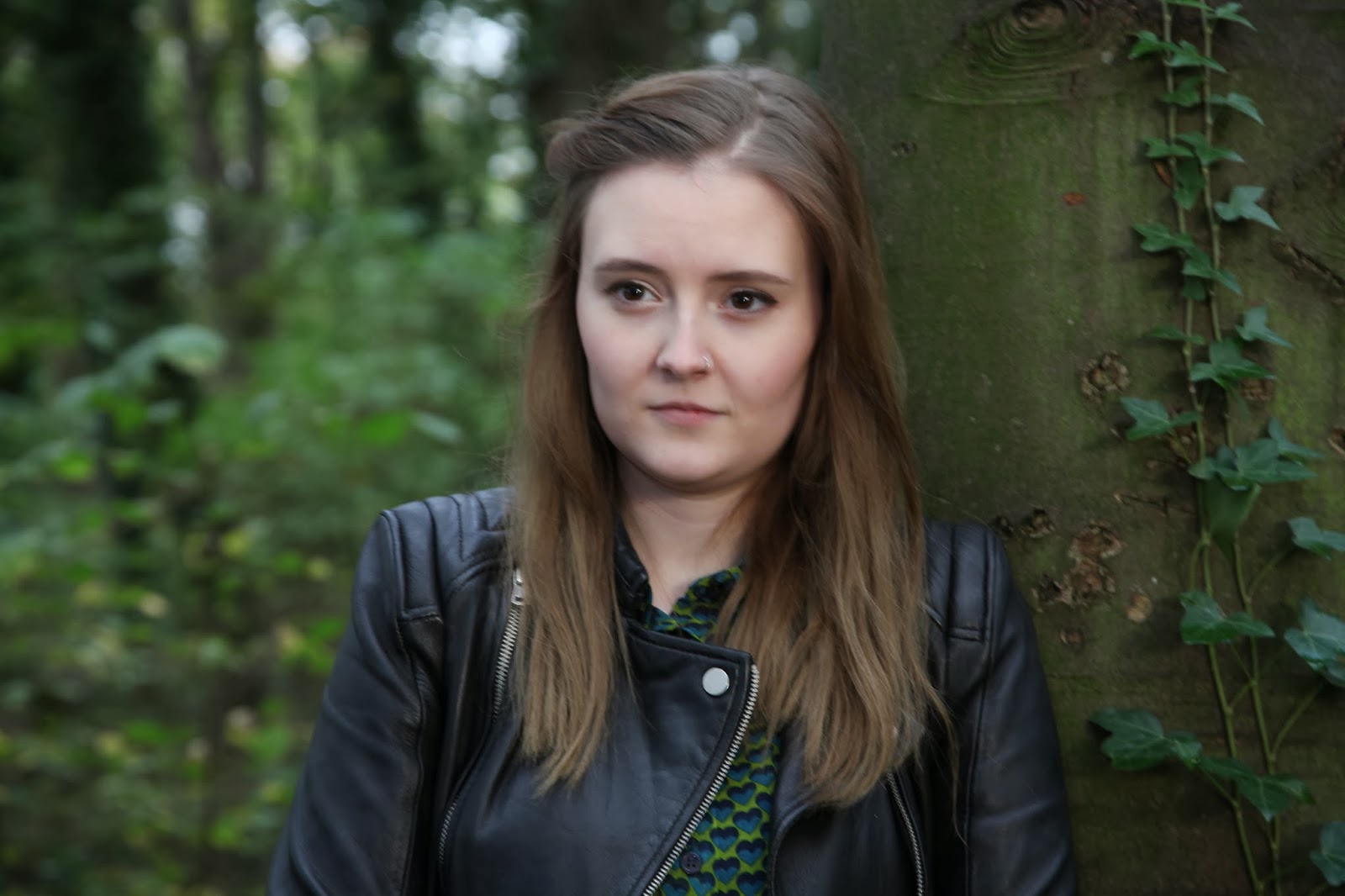
I picked the location of a forest, as I wanted the photographs to be in a natural setting. Here you can see the model's face stands out from the blurry background- I decreased the flash level a little from to the photograph above, as you can see her face appears more natural with the background, rather than making the model's facial skin tone disappear and appear ghost-like.